
Close to 50 models were launched in India in the past 12 months, but companies have not been able to realise their potential due to the pandemic.

While the overall passenger car industry is expected to grow at around seven per cent a year in the next five years, SUV growth is expected to be over 10 per cent.

What explains India's love affair with SUVs? They are not exactly "value for money" -- the watchword for brands across segments -- nor always practical. Is it for the badge value? Or the butch imagery associated with SUVs? Maybe both, says Alokananda Chakraborty.

The electric vehicle evolution in India's passenger vehicle market has remained frozen in time and may see limited adoption over the next decade, experts say.

Close to six months since the launch of Tata Neu, the super application (app) from Tata Sons Group is all set for a revamp. The highlights include a reimagined rewards programme or NeuPass, a more seamless user experience by increasing the digital maturity of brands, adding more brands to the platform, and hiring category leaders to drive the next phase of growth. When it comes to brands, Titan will join Tata Neu by Diwali. Tata Motors and Air India will be on board after the Festival of Lights.

Market leaders saw good traction for new cars, including the electric ones.

Smart positioning, continued communication and a global design language have played a big role, say experts
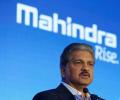
With increased consumer awareness and government support in place, it is the opportune time to enter the electric passenger vehicle segment, Mahindra Group Chairman Anand Mahindra said on Monday. With an eye on gaining leadership in the electric four-wheeler segment, the Indian auto major announced that it will launch five new electric Sports Utility Vehicles (SUVs) for both domestic and international markets, with the first four expected to hit the road between 2024 and 2026. The company would introduce the first of the five e-SUVs towards the end of 2024, starting with the Indian market.

What will it take for Tesla to plug and play in India? Sector pundits say it's a mix of strategy, getting the price right, timing, the right talent, and above all, patience.

Over the last few days, as the fortunes of Thomas Cook Plc took a wrong turn, the Indian entity scrambled to distance itself from its erstwhile parent. Experts have said that the travel firm must not change its brand name.

Participants will watch out for the Brexit poll outcome in the late morning trades tomorrow.

A large number of American companies like Google, Uber and IBM are offering their resources to help India successfully fight the battle against the deadly coronavirus pandemic.
Shivani Shinde reports. The youngest member of the Tata group, the much-awaited Tata Neu, has finally been launched for people across the country. The 'super app' offers a number of services ranging from financial services to tech, travel and even groceries. The app takes off with a customer base of 120 million, with 2,500 offline stores. According to the Tata group, the app will be a one-stop destination for all consumer needs. The super app also offers a bouquet of financial offers like Unified Payments Interface (UPI), bill payments, loans and insurance. Tata Neu will also provide other services like fashion, gadgets, groceries, travel and health.
On a cloudy Monday this month, Mohammed Irshad flew from Kochi to Gurugram to attend an exclusive investor networking event. Among a handful of founders selected for the event, Irshad was to pitch his peer-to-peer learning start-up Notespaedia for funding in front of top venture capital investors such as AngelBay, Elevation Capital, and Inflection Point Ventures. He failed to woo them, but the feisty entrepreneur was determined to continue his hunt.

Mukesh Ambani-owned RIL's JioMart is set to launch a slew of new products including financial services, electronics to airline tickets to take on the competition from upcoming rivals like the Tata Super app and other established players including PayTM, Amazon and Flipkart. This comes at a time when RIL's e-commerce revenues are set to grow by 35 per cent to $15 billion within four years and its core retail revenue is expected to grow at the same pace to $44 billion, as per a forecast by Goldman Sachs. "The Tata vs JioMart war will be the next big corporate battle to watch. "While Tata has an upper hand like in-house products and brands, RIL has the backing of global biggies like Google, Facebook and Microsoft," said head of a rating firm asking not to be quoted.

The Nikkei share average rose 2.6% to close at 15,195.77 points, more than recouping Tuesday's losses.

The 30-share Sensex ended higher by 31 points at 26,591 and the 50-share Nifty gained 10 points at 8,061.

According to market experts, GST Bill, movement of the rupee and uncertain global cues amid expected rate cut by the US Fed will dictate the movement of the markets.

BSE Midcap and Smallcap indices ended in line with their larger counterparts and closed marginally up 0.2% and 0.4%, each
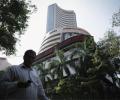
The higher rate cut by RBI is positive for rate-sensitive sectors in the medium to long term.

Bank shares were the top losers after sharp gains last week.

The WPI inflation stood at negative 2.4% in May 2015, compared with a negative 2.65% in April 2015.

Investors turned cautious ahead of the US Fed meet outcome later today and July F&O expiry.

After a volatile session, Sensex closed the day 563 points lower
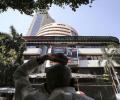
The Sensex has hit its lowest level since August 29, 2016 whereas the Nifty hit its lowest level since Sep 12, 2016

Several Sensex stocks hits 52-week low in intra-day trade on Monday with financials leading the decline.

The driver of the private school van had his earphones on and was driving on the wrong side of the road. The milk tanker driver was allegedly under the influence of alcohol, police said.

The 30-share Sensex ended down 30.30 points at 28,161.72 and the 50-share Nifty dipped 7.95 points at 8,543.

Most Asian markets ended with gains.

A complete riding gear may as well save you from dying or from serious injuries. And if you say that riding gear is too hot to wear, remember -- it is always better to have sweat on yourself than blood.
